Poster template · Landscape 16:9 · 3 columns
Three-Column Evidence Grid Academic Poster Template
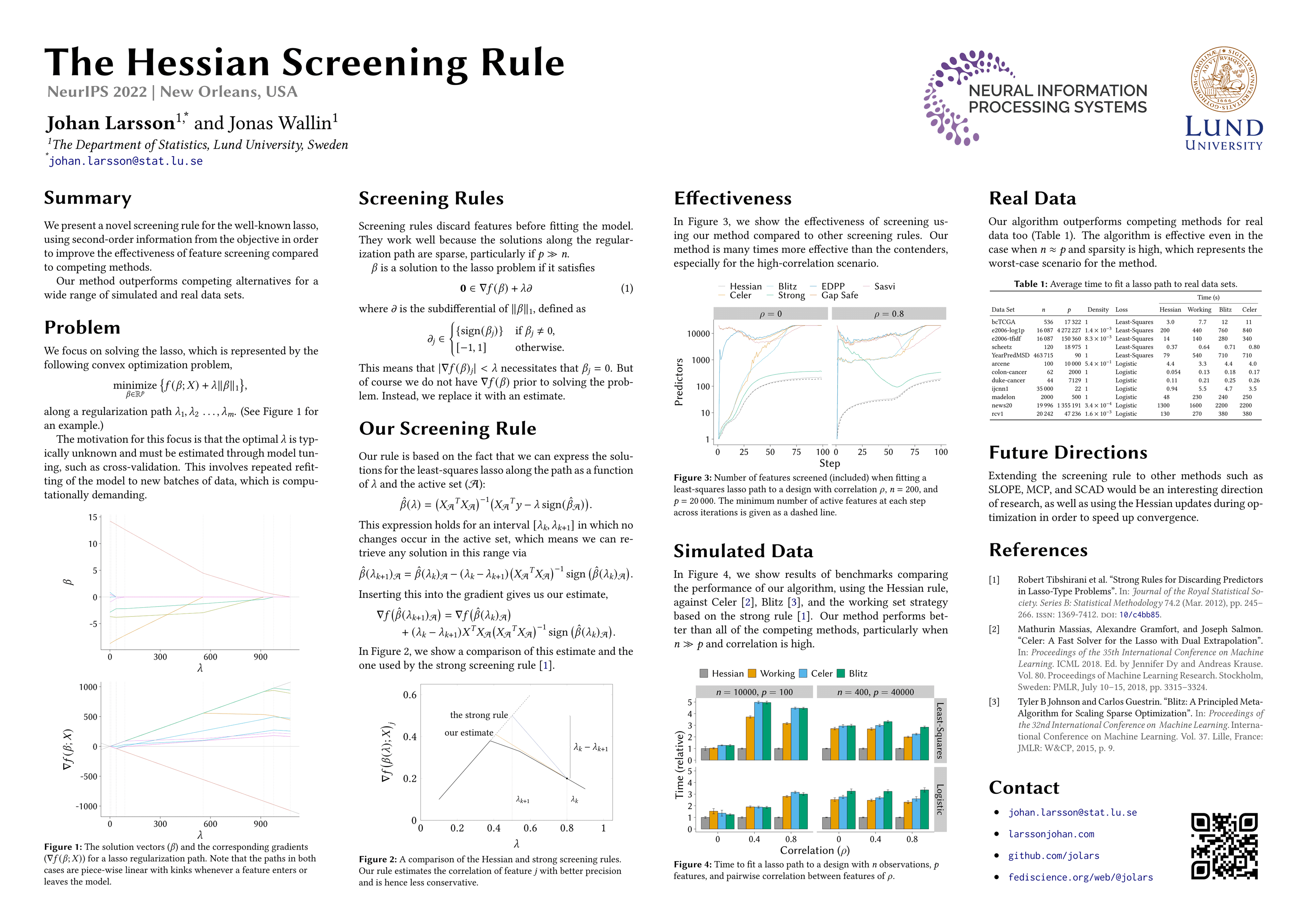
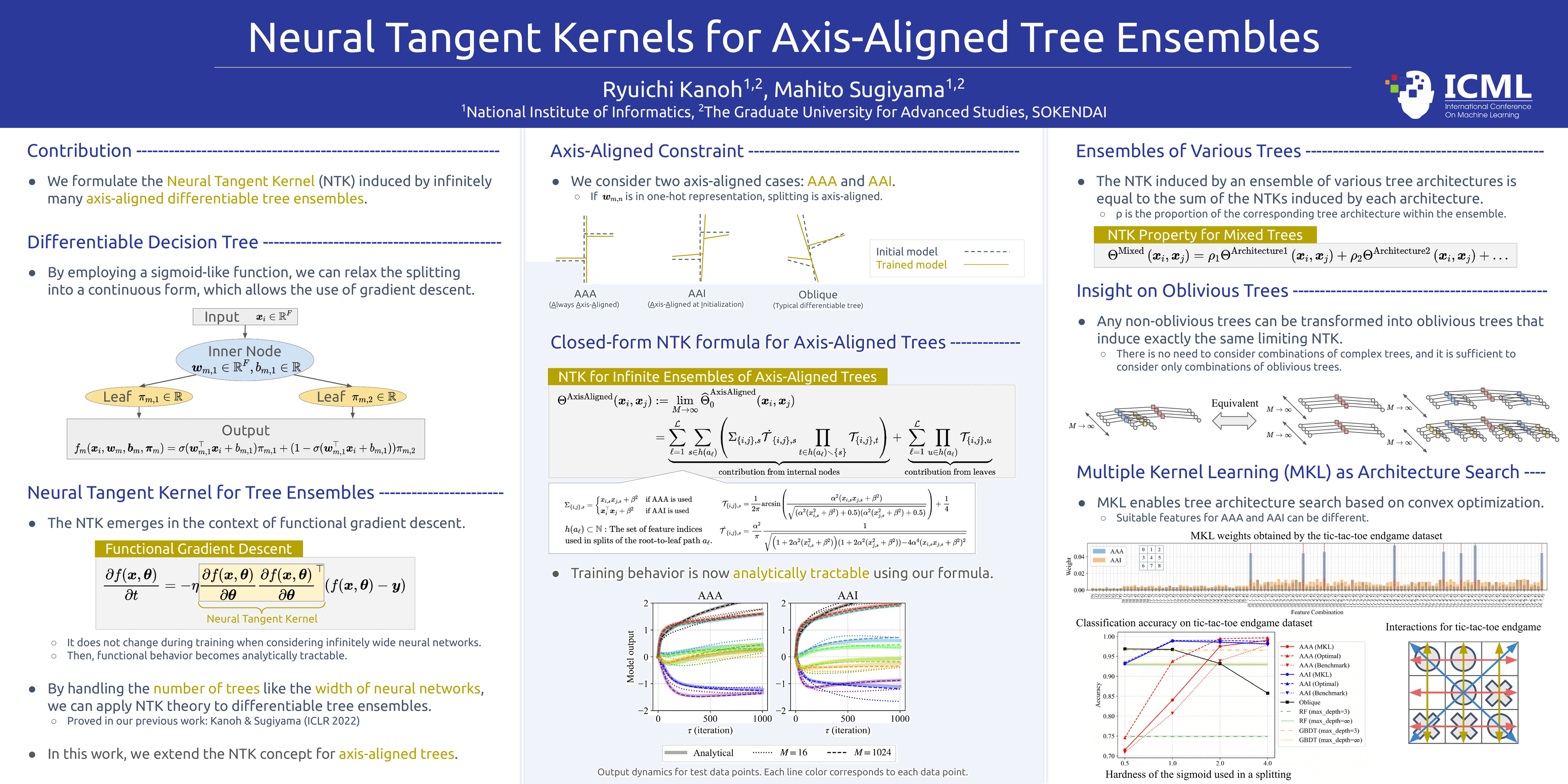
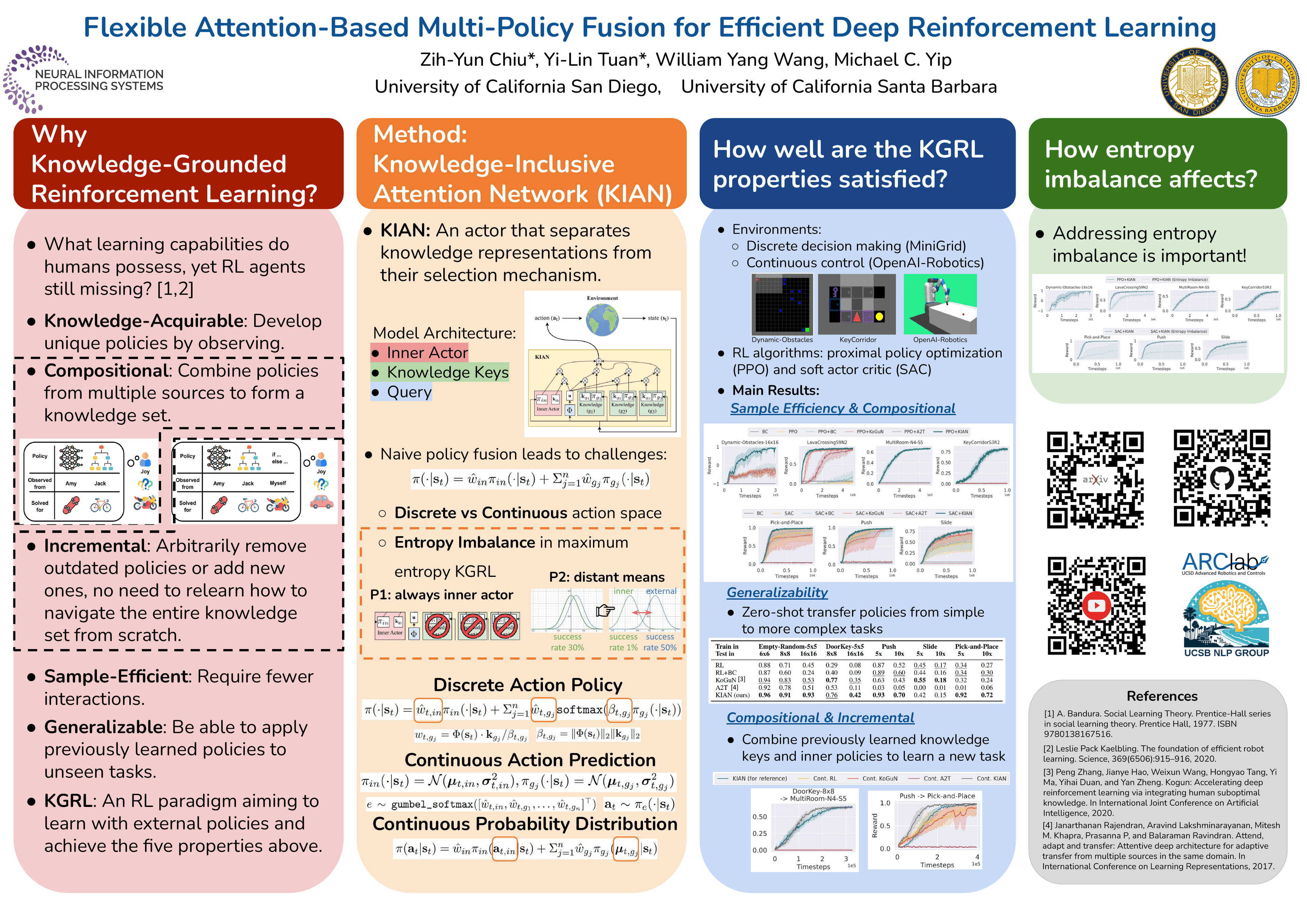
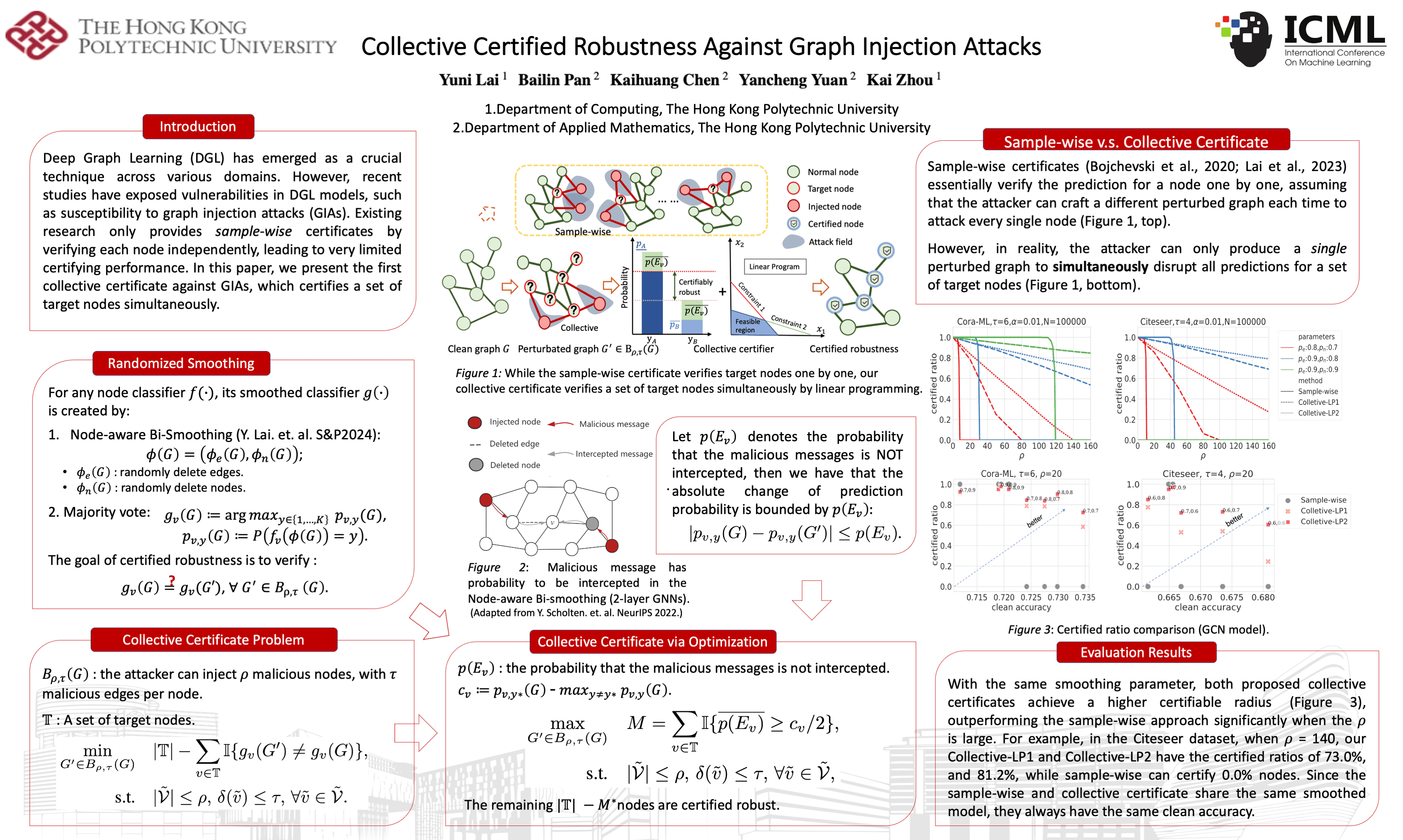
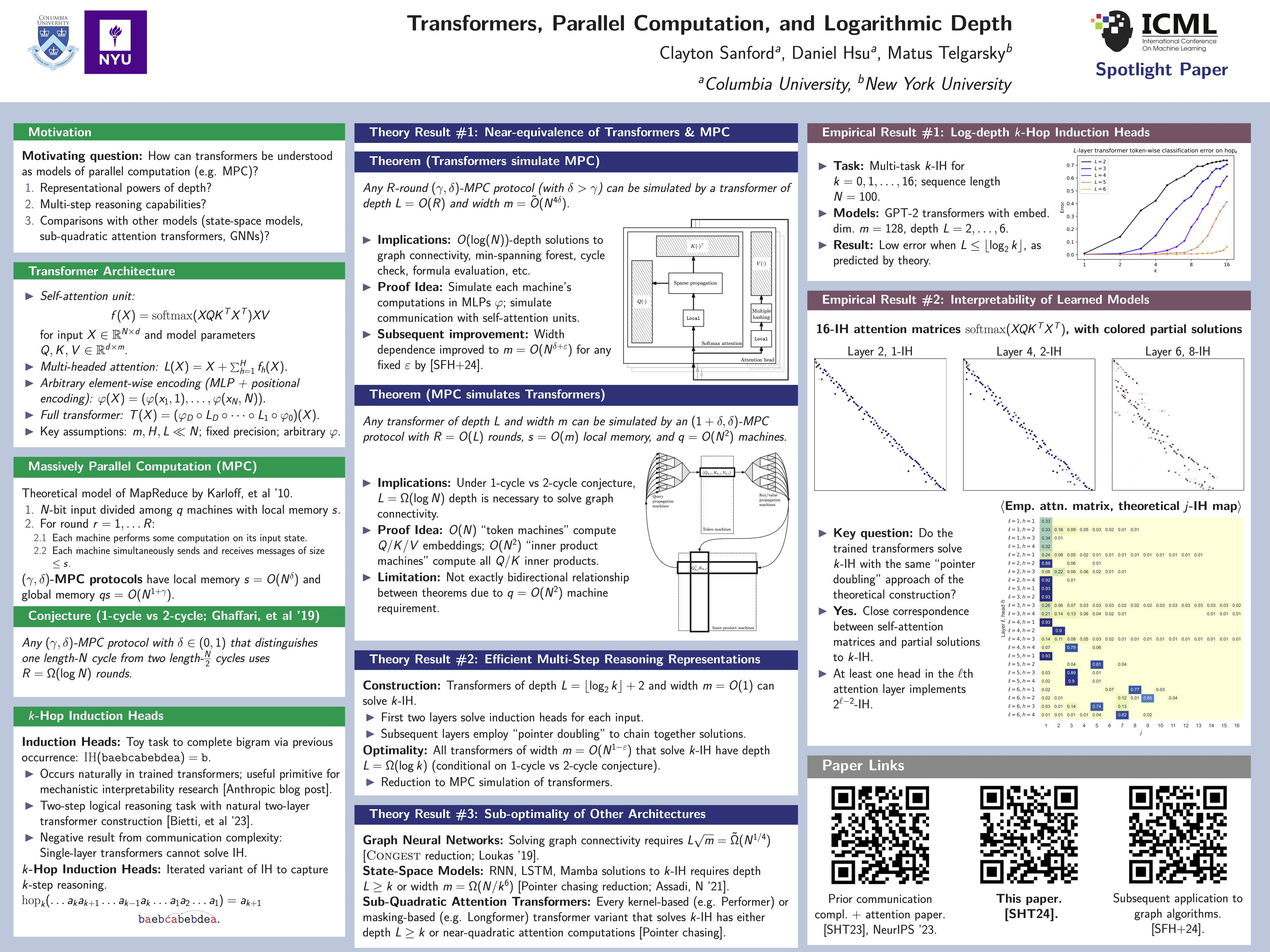
Three columns of white cards with coloured title bars on a pale grey-blue ground: background on the left, theorems in the centre, experiments on the right. It suits papers that pair several formal results with separate experiments.
What this template is
A 16:9 landscape layout in three columns. A header band carries the title, authors and affiliations. Below it, on a pale grey-blue ground, each column is a stack of white cards topped by a coloured title bar. The left column is narrower than the other two, leaving the wider centre and right columns for theorems and plots. Readers go column by column from left to right, card by card downwards. It fits machine-learning and methods papers that state several theorems or propositions and back them with a few separate experiments.
Layout
Motivation and background
Left column, the narrowest of the threeOpen with the research question, then three or four short cards defining the model and background concepts.
150–200 words
Theoretical results
Centre column, a stack of cardsOne card per theorem: the statement, its implications as bullets, a proof idea and an optional diagram from the paper.
180–240 words
Empirical evidence
Right column, references at its footOne card per experiment: the task setup, the paper's result plot or heat map, and how it matches the theory.
120–160 words
Can it be printed large?
The poster Yila builds in this layout is a single 48 × 27 inch PowerPoint page in 16:9. Card headings, theorem statements and bullets are real text, so they remain sharp at any print size, and no body text falls below 20 pt. Result plots and heat maps are the original images from your paper, only cropped or scaled, so their sharpness is set by those source files. Check each plot at full zoom in the PDF and confirm your venue's board size before you send it to the printer.
How to use it in Yila
- 1Pick a layout
- 2Upload your paper
- 3Yila builds an editable PPTX poster and a PDF
Tips
Do
- Make each card carry one claim, and write its title bar as that claim, so readers can follow the argument by titles alone.
- Format every theorem card in the centre column the same way, statement first and then bullets, so parallel results read as a set.
- Have each experiment card in the right column name the centre-column theorem it tests, tying both sides of the grid together.
Avoid
- Avoid stretching one card down a whole column; the grid works through short blocks, and a tall card breaks the column's rhythm.
- Avoid loading the narrow left column with long definitions; it is the slimmest column, and an overfull one shrinks the shared type size.
- Avoid using heat maps exported at screen resolution; the card shows the original file as it is, so blurred cells stay blurred.
Questions
Will the evidence grid poster print well on a full-size conference board?
Yes, provided the figures are good. Yila delivers a 48 × 27 inch PowerPoint page whose text is real text with body type of at least 20 pt, so headings and theorem statements print crisply. Plots are your paper's own images, never redrawn, and print only as well as those originals. Check them in the PDF, then print it at the board size your venue sets.
Can I change the header colours or add a fourth column?
Yila builds this layout with its three columns and coloured title bars as they are. The PPTX it delivers is editable, so you can recolour a title bar or change text colours yourself in PowerPoint, Keynote or WPS. For four columns, choose the Classic Four-Column Landscape or the Color Block Story layout in the library and build again from the same paper.
Do I get a PowerPoint file?
Yes. You receive a one-page PPTX poster and a PDF exported from it. Card titles, theorem statements and bullets are real text that you can correct or shorten in PowerPoint, Keynote or WPS. The plots are your paper's original images and stay as images. Export the PDF again after any edit so the printed copy matches.
Do I have to pay to use it?
Browsing this page is free of charge. Building a poster in this layout with Yila consumes credits, and new accounts receive 2,500 credits at sign-up. That is enough to try the grid on one paper and see whether its theorems and experiments divide cleanly into cards before you commit to it.
Will content from the example poster appear on mine?
No. The example is a published poster by other authors, shown with permission only to illustrate how the cards and title bars are arranged. Every title, theorem, plot and reference on your poster comes from the paper you upload, as PDF, Word, PowerPoint or text; nothing is copied from the example.
My paper has only one main theorem. Does this layout still work?
It can. Give the main theorem a large card at the top of the centre column, then use the cards below it for corollaries, special cases or an intuitive explanation, and leave the right column for experiments. If your paper is mostly derivation with very little evaluation, the Theory and Equations layout may fit better.