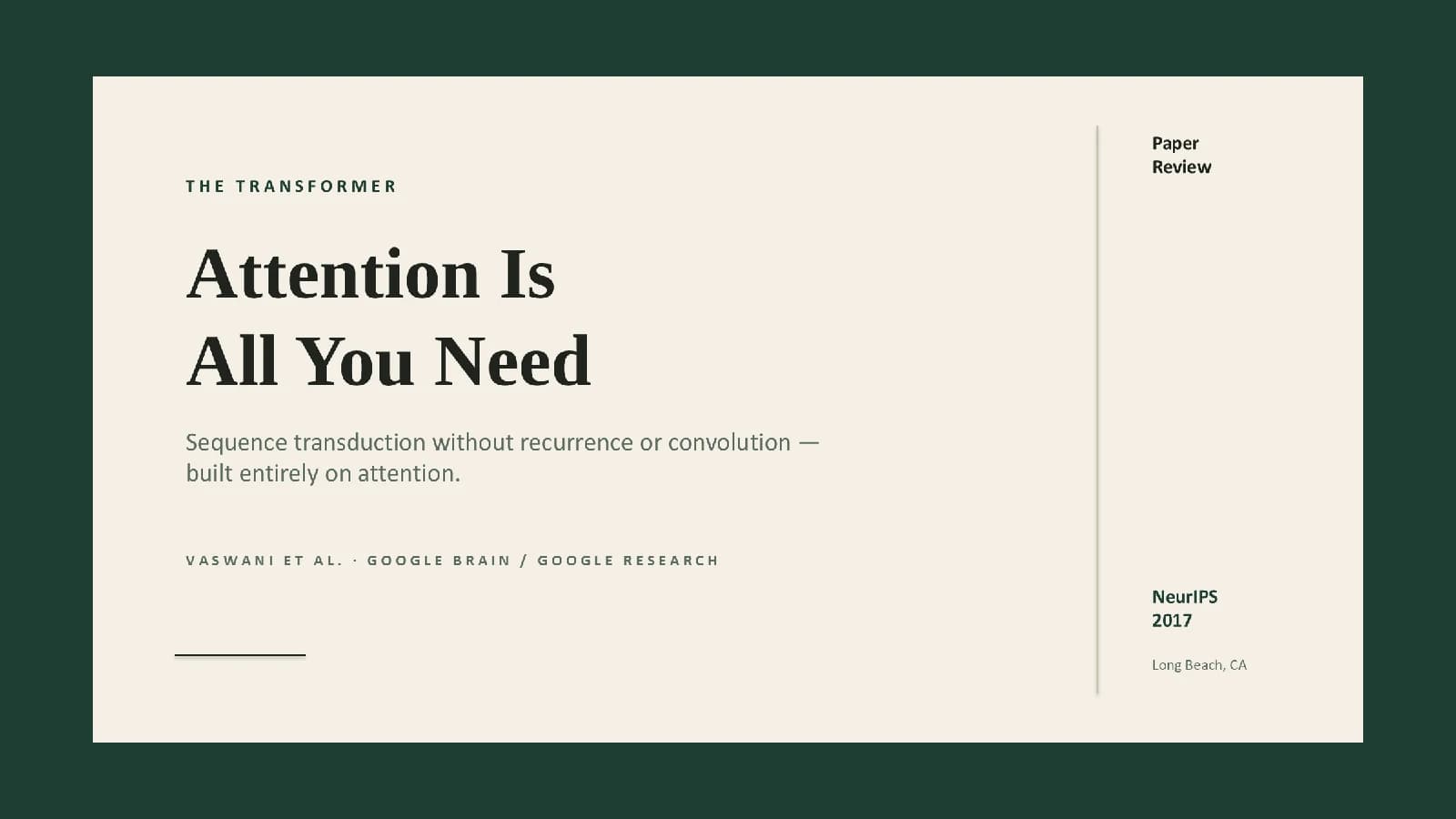
Slide template · 16:9 · 13 slides
Crystal Blue Biomedical Journal Club Slides Template
Cell and tissue imagery dissolves into the edges of a cool near-white page while the centre stays clear for text and figures. Serif titles under a blue section kicker suit oncology, immunology and single-cell journal clubs.

What this template is
There is no rail or band here; the atmosphere comes from generated background plates, where microscopy, tissue sections or molecular networks fade in from the margins and leave the middle quiet. Titles are set in a serif such as Liberation Serif, with a small bold blue kicker above them, and the cover, contents and closing slides add a short blue rule under the title. Content sits on white cards and pale blue panels. When one value needs flagging, the theme uses a muted mauve rather than red. The intended narrative runs from clinical context to biological question, method, results, interpretation, then limitations and outlook.
What goes in each section
Cover
11 min
The full paper title on the clear left side of the plate, then the session type and citation.
 1
Contents and clinical context
2–32 min
A four-part contents slide, then the clinical problem and why single-cell resolution helps.
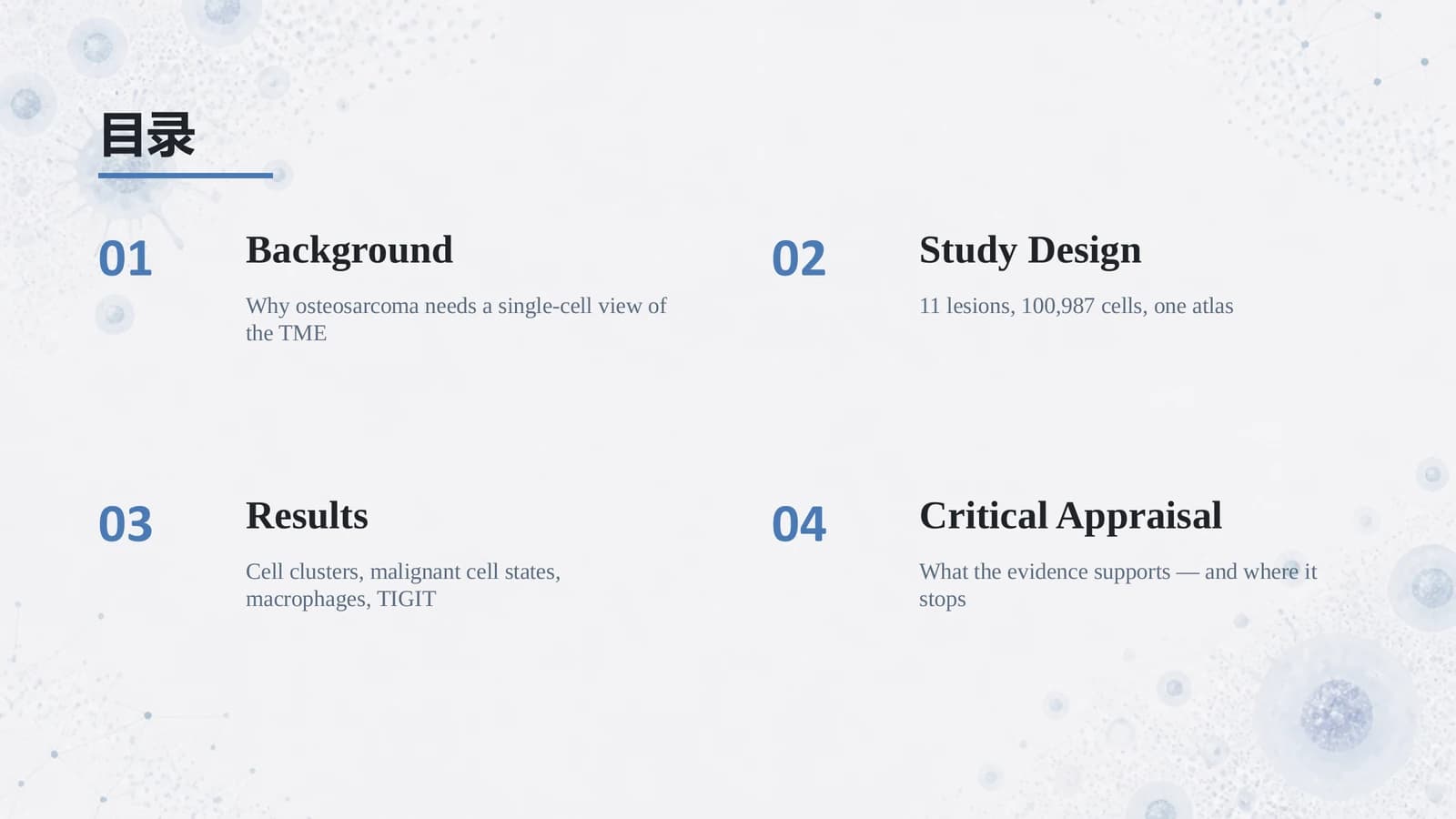 2
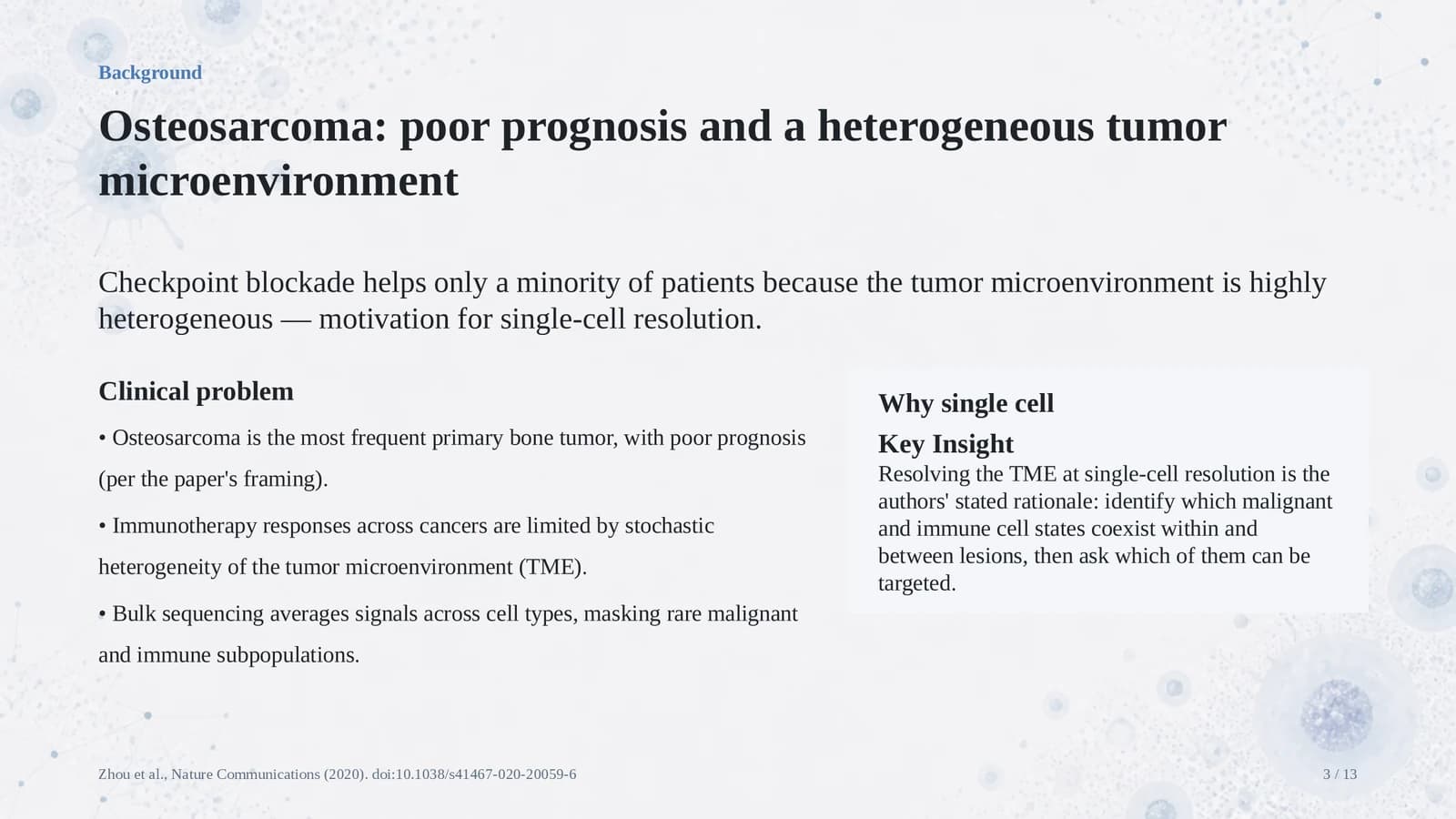 3
Study design
4–52 min
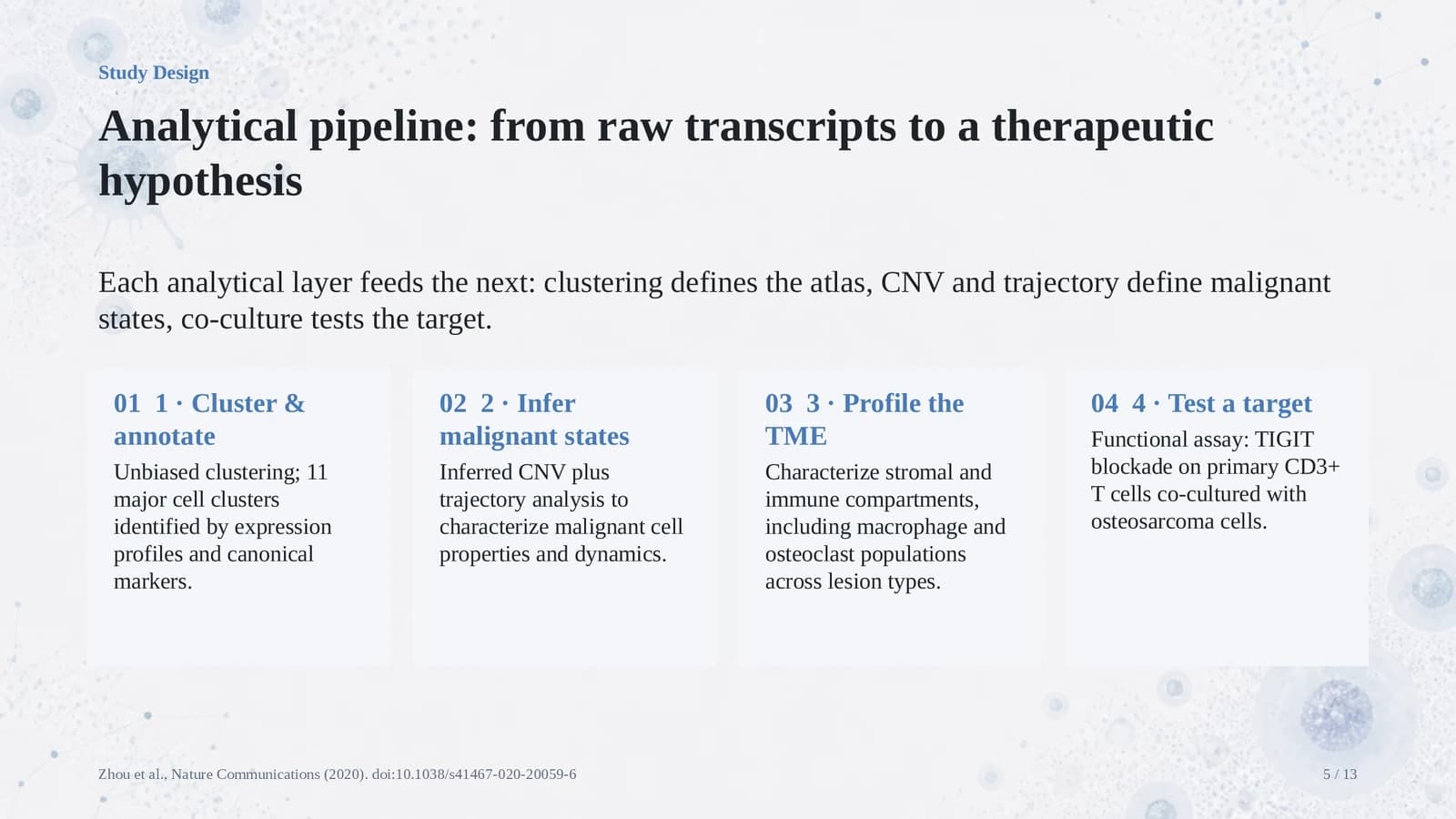
Number cards for the cohort, then four step cards walking through the analytical pipeline.
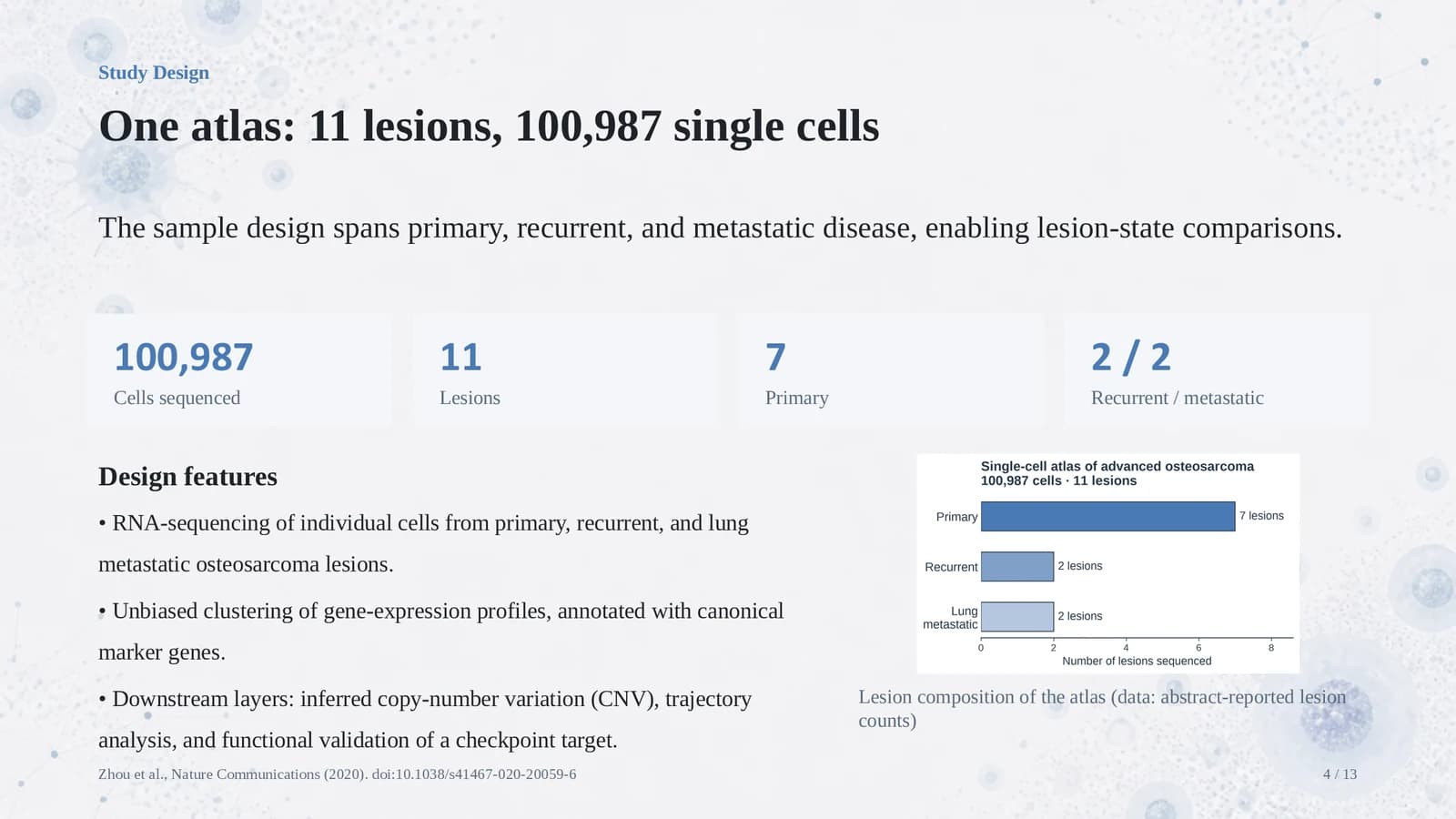 4
 5
Results
6–95 min
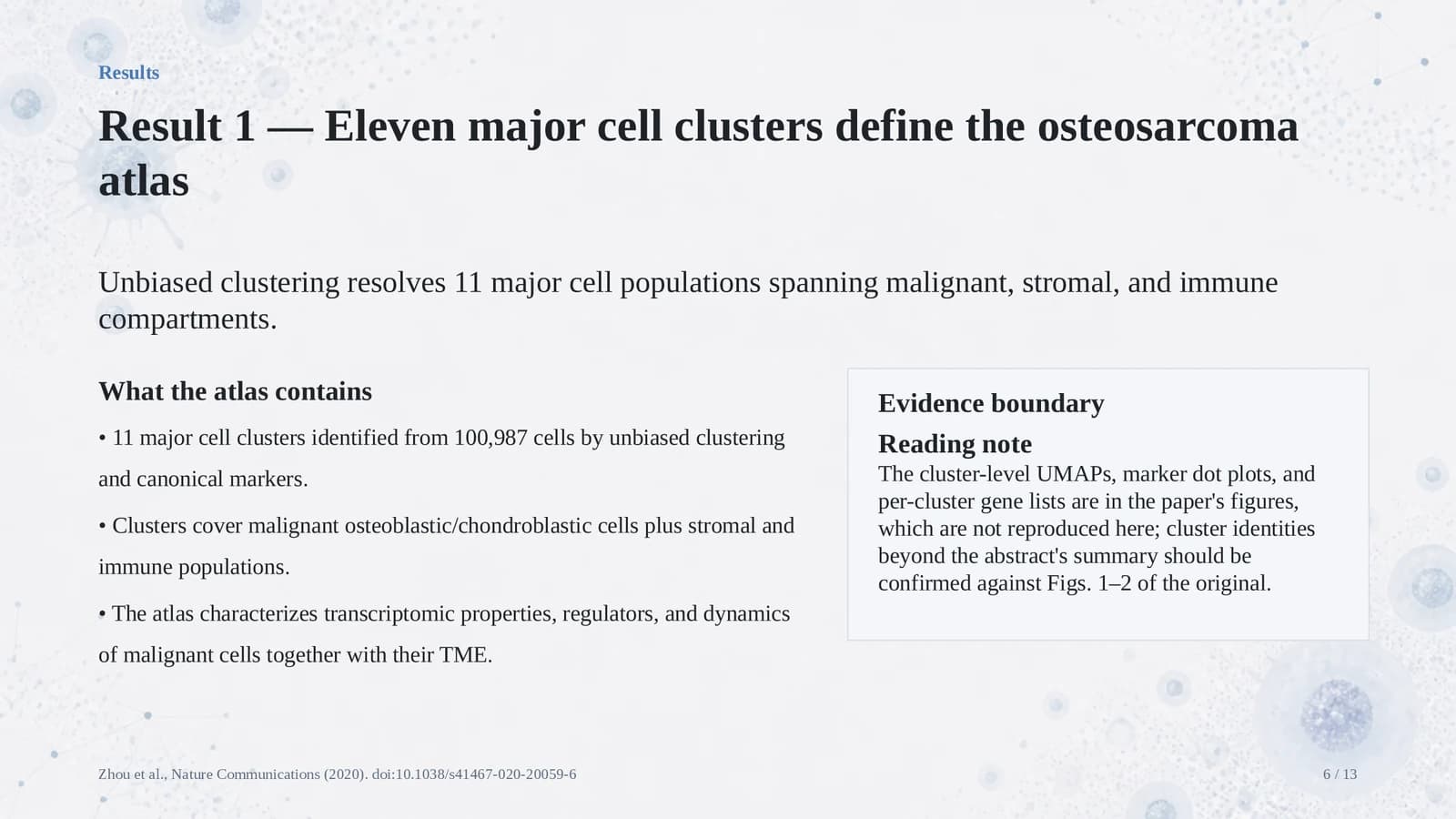
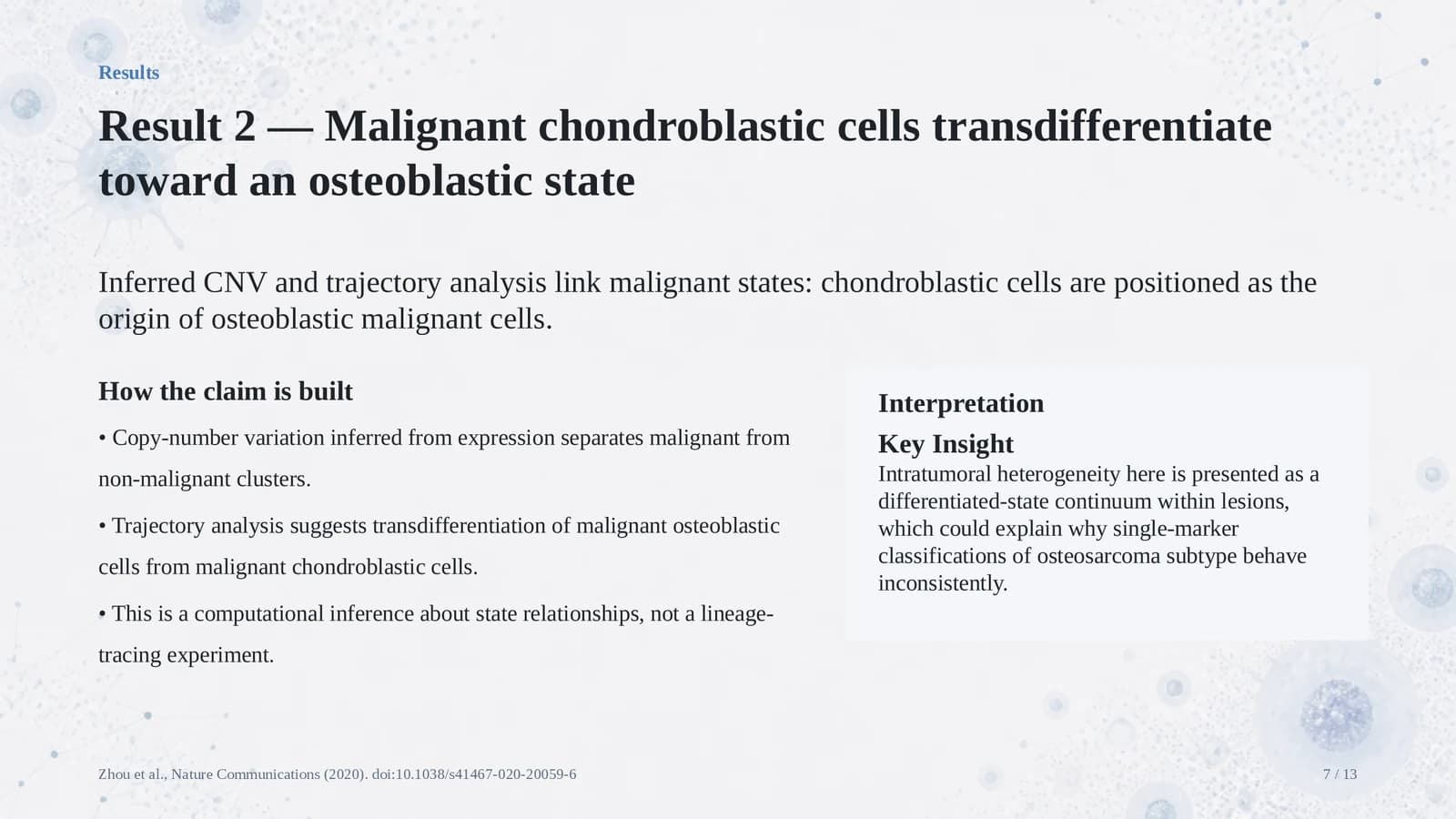
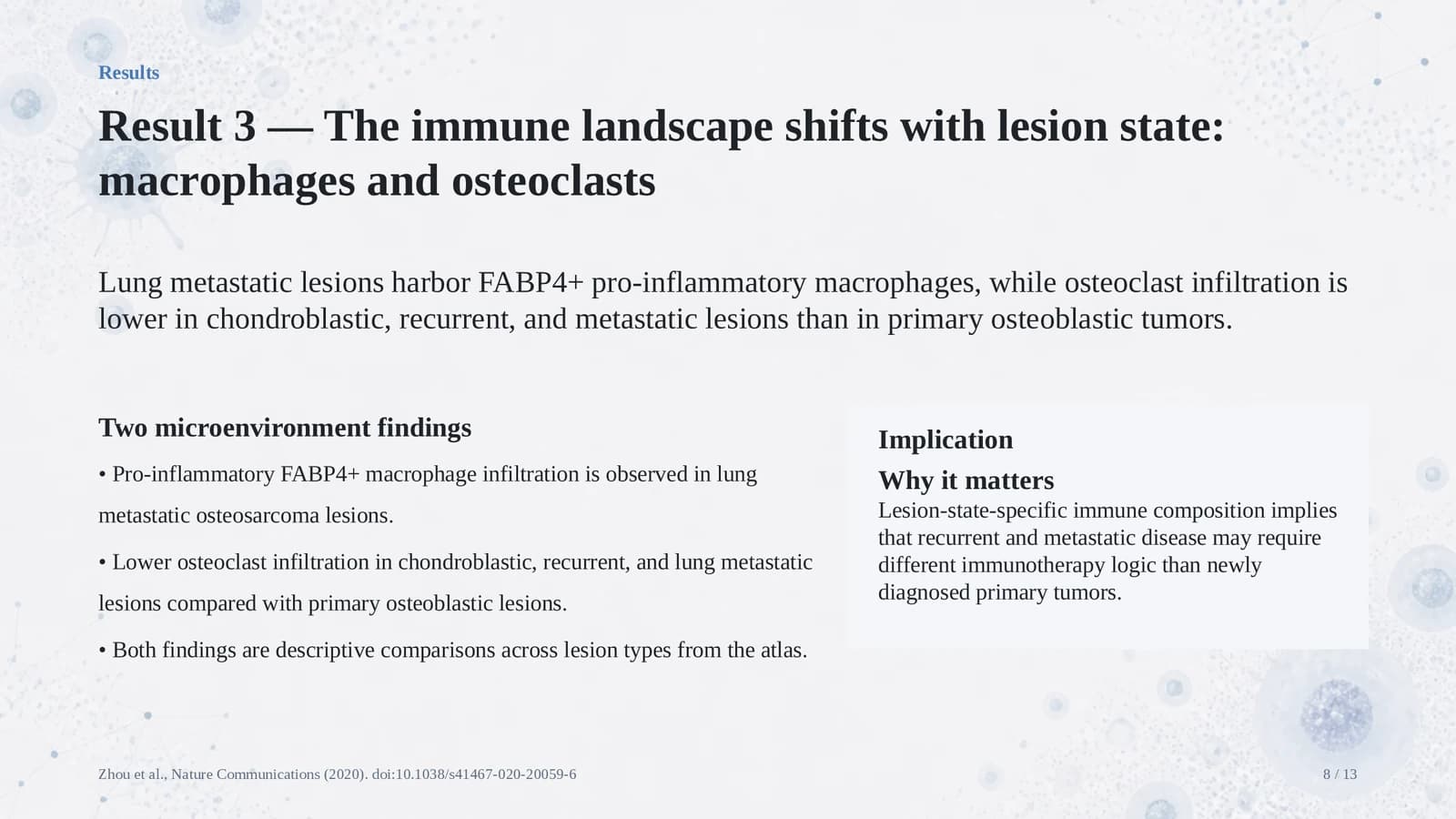
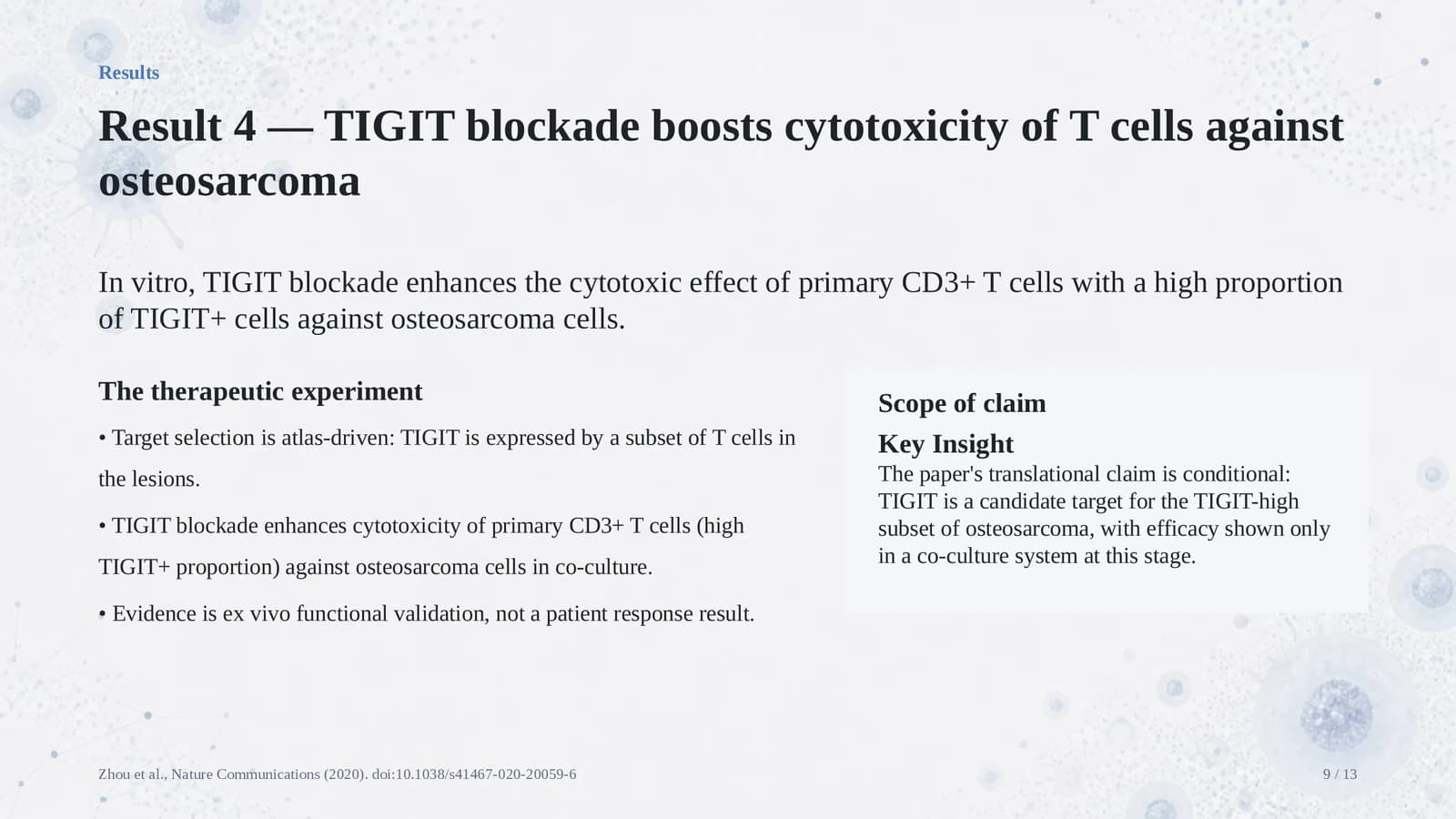
One numbered result per slide: evidence bullets on the left, interpretation or evidence boundary on the right.
 6
 7
 8
 9
Model and contribution
10–112 min
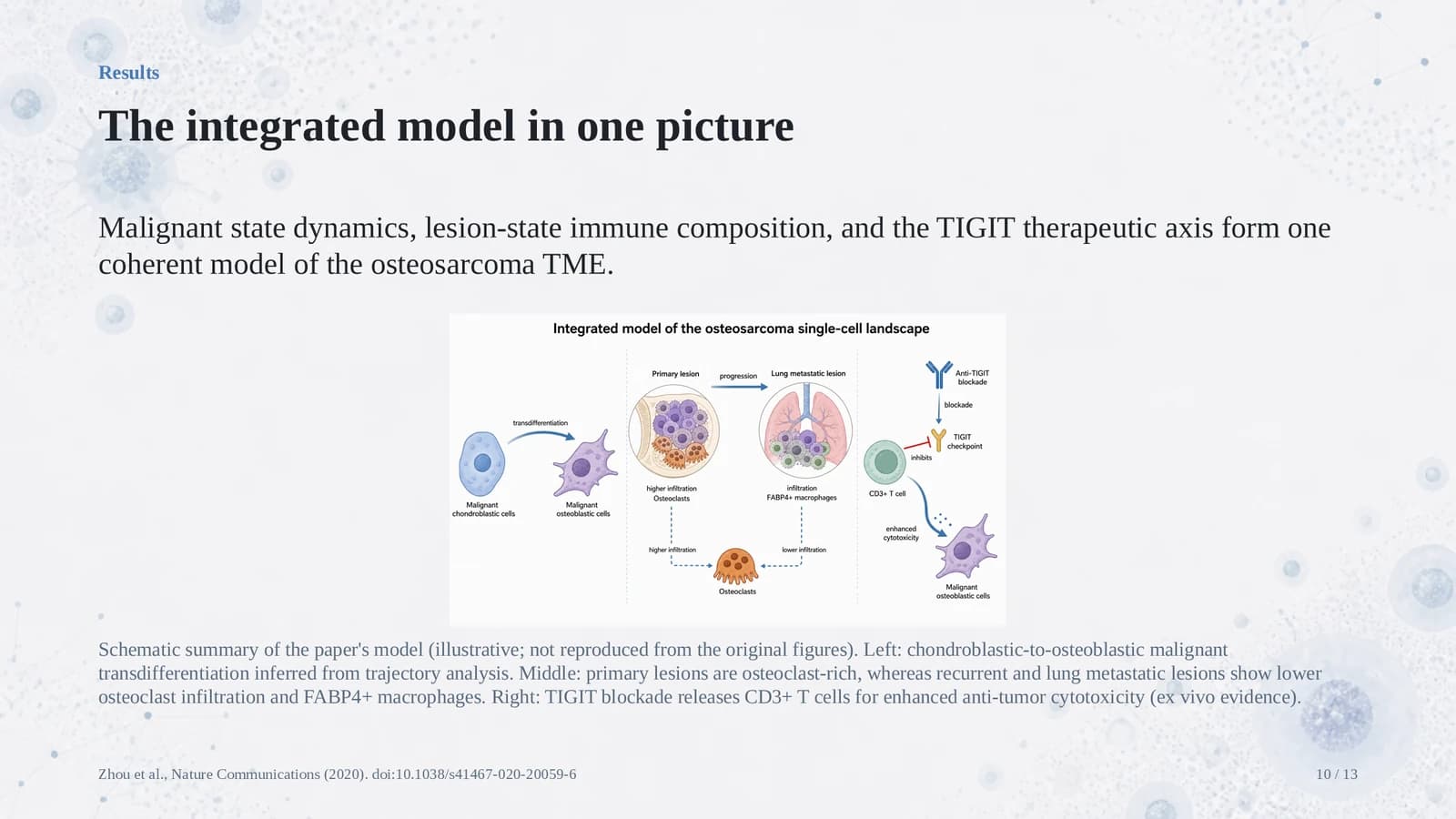
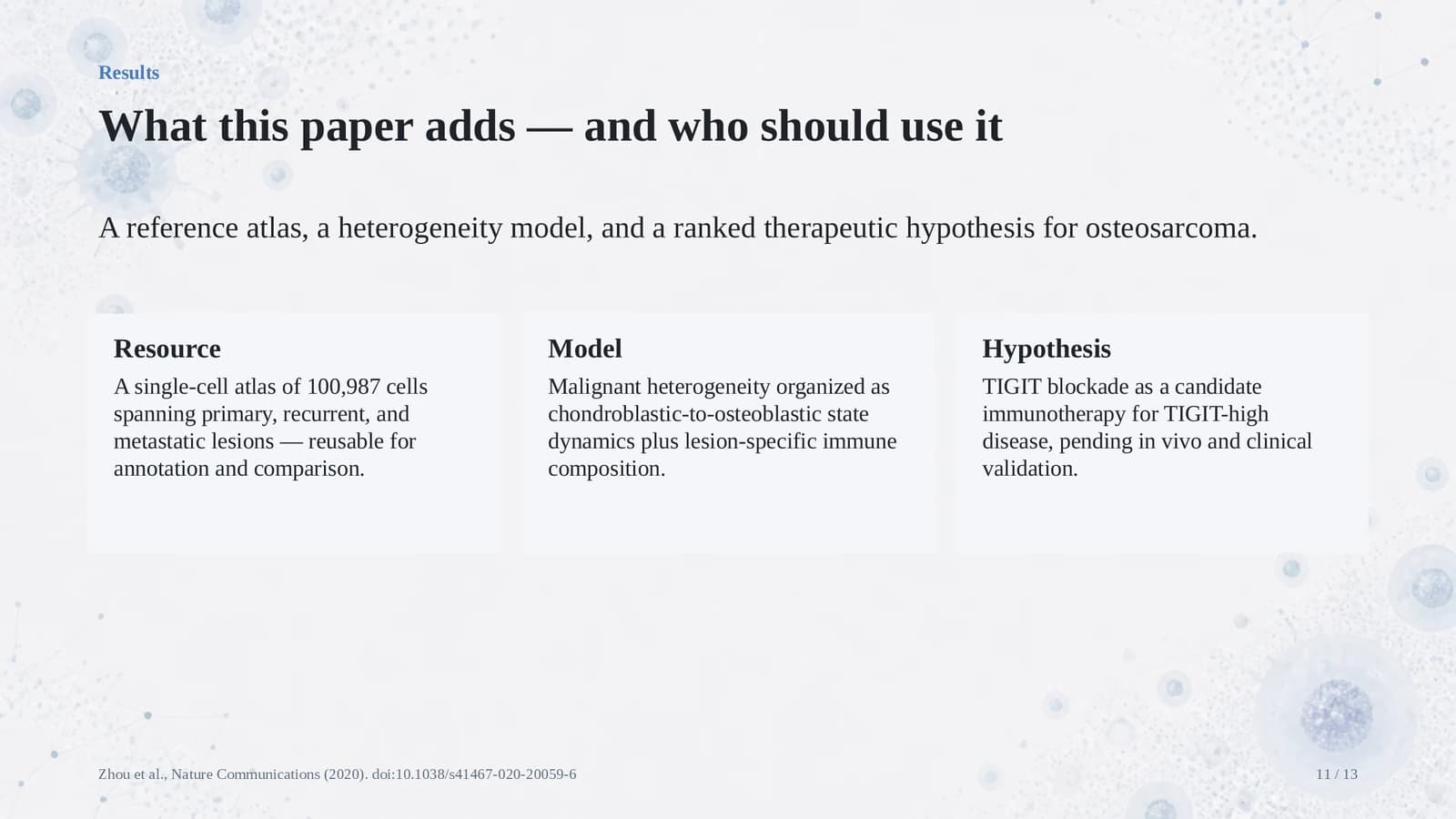
One schematic ties the findings together; three cards name the resource, model and hypothesis.
 10
 11
Critical appraisal
122 min
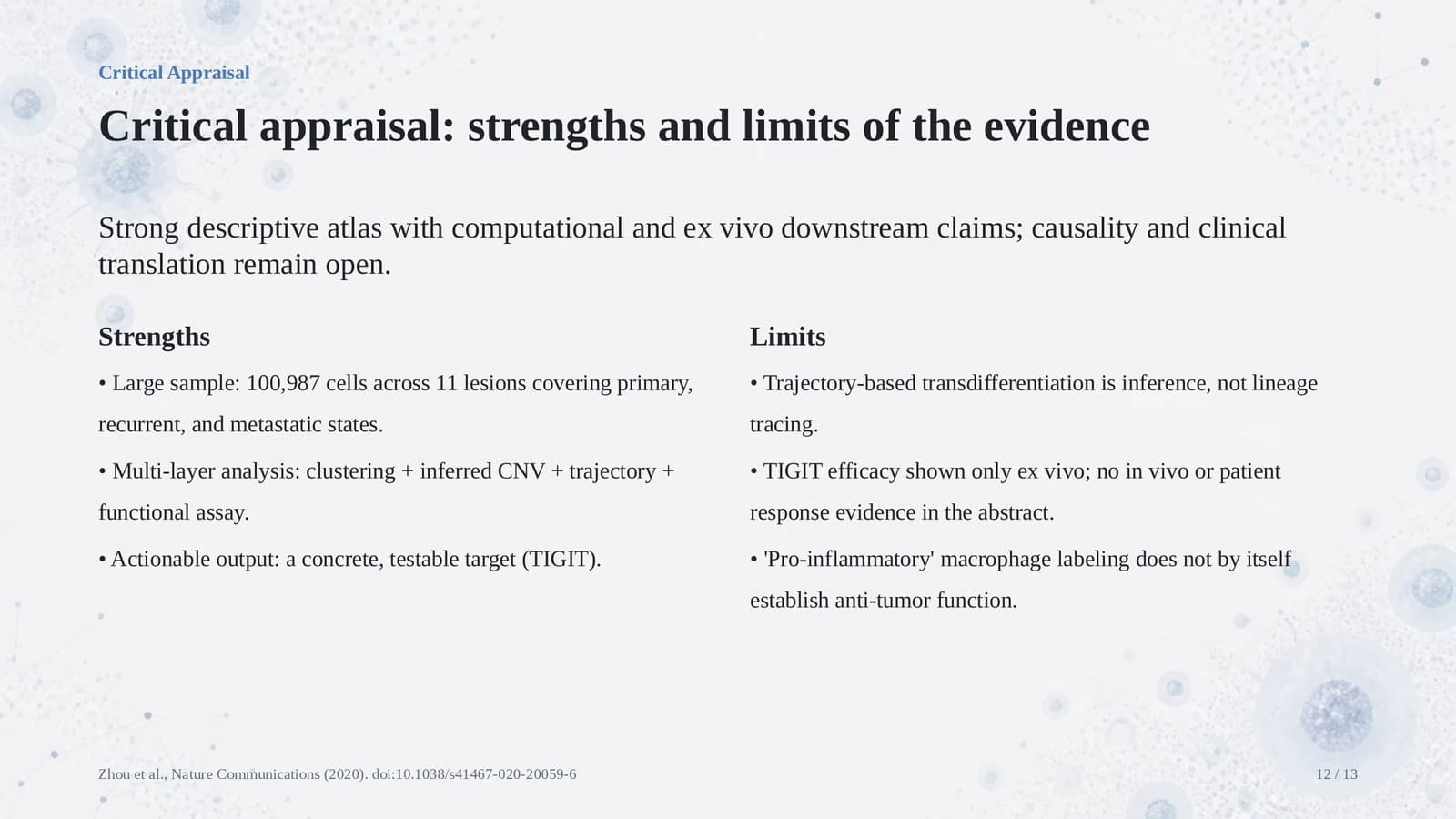
Strengths and limits in two balanced columns, leaving room for the group's own discussion.
 12
Take-home messages
131 min
Three numbered one-sentence messages, followed by the full citation of the paper.
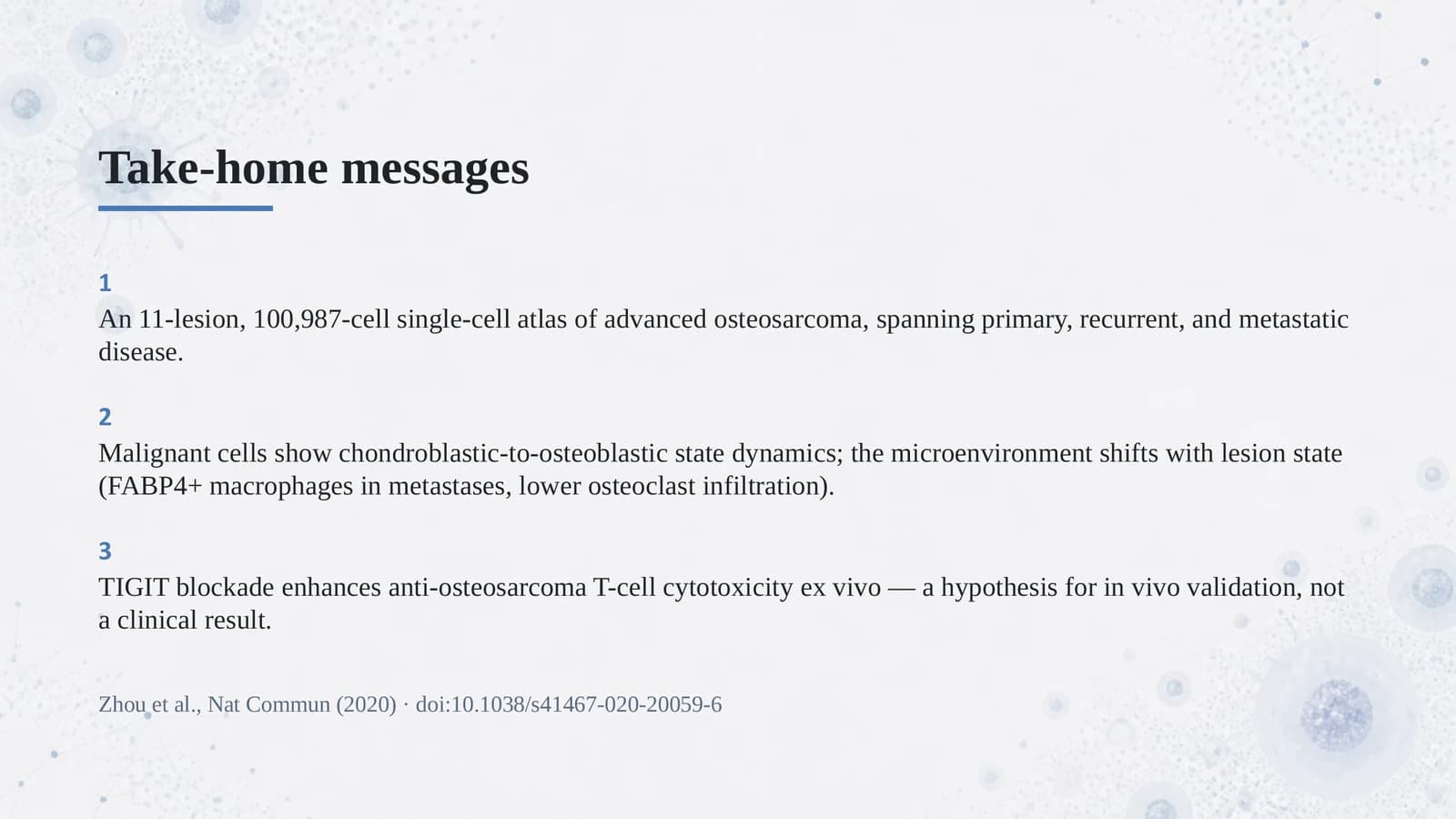 13
What's in the file
The sample file has 13 slides at 16:9 with 101 text boxes and 2 pictures, a small bar chart and the integrated-model schematic. It includes speaker notes, useful as a model for your own script. Type is set in Liberation Serif. The microscopy background plates bring the download to 4.4 MB. The osteosarcoma content is example material to be replaced.
- Slides
- 13
- Aspect ratio
- 16:9
- Editable text boxes
- 101
- Pictures
- 2
- Speaker notes
- Yes
- Theme fonts
- Liberation Serif
- File size
- 4.4 MB
Good for
Biomedical journal club
Numbered result slides each carry an evidence-boundary panel, and a dedicated appraisal slide frames the question every journal club asks: does the conclusion hold? Rewrite the result titles and side panels first.
Slides 6–9, 12
Oncology or immunology lab meeting
Drop your own single-cell or pathology results into the number cards and result slides; the cell imagery in the plates matches the subject. Flag the one abnormal value in mauve, not alarm red.
Slides 4, 6–8
Graduate literature seminar
The contents slide splits a paper into background, design, results and appraisal, and the speaker notes show how each slide might be narrated, which helps a student presenting a paper for the first time.
Slides 2, 11–12
How to use it in Yila
- 1Pick a template
- 2Upload your paper or describe your talk
- 3Yila builds an editable PPTX
Tips
Do
- Keep figures and copy in the quiet centre of the plate; text over the busy edge pattern loses contrast.
- Pair every result slide with a plain-language line on what the finding means clinically or mechanistically.
- Use the mauve attention colour once per deck, for the single value the audience must notice.
Avoid
- If you drop the background plates, do not fall back to bare white; use the same cool near-white, or it reads as another theme.
- Do not mark an abnormal value in red; this medical theme deliberately chose a muted mauve for emphasis.
- Do not place a dense figure over the edge of the plate; centre it on a white card so its labels stay legible.
Questions
Can I swap the crystal blue for another colour?
The cool near-white page, the blue accent and the microscopy plates are what make up this theme, and Yila lays slides out in them. For a different palette, choose another theme from the library and generate again. The text in the resulting PPTX can still be edited in PowerPoint, Keynote or WPS.
The sample has 13 slides. Can I add slides for more results?
Yes. The sample is only a demonstration. Yila rewrites every slide from the paper you upload, so a study with five main results gets five result slides rather than four, and you can duplicate or delete slides in PowerPoint afterwards. Each added result slide keeps the same kicker, serif title and side panel.
Does it open in PowerPoint and Keynote?
Yes. The download is a PPTX that opens in PowerPoint, Keynote and WPS with editable text, and the speaker notes come with it. The sample uses Liberation Serif; where that font is missing, the application shows a substitute serif.
Is it free to use?
Viewing this page and downloading the sample deck cost nothing. Generating a deck from your own paper with Yila consumes credits, and every new account receives 2,500 credits, enough to try one paper before your journal club.
Can the cell imagery in the background match my field?
The theme's rules allow cell microscopy, tissue sections, molecular networks or other biomedical imagery, always fading in from the edges with a clear centre. The plates are atmosphere, not data; your own figures still go in the middle of the slide.
Why is the file 4.4 MB?
Mostly because of the generated background plate behind each slide. The text, cards and the two pictures are small by comparison, and a file of this size usually travels by email or a course platform without trouble.